Choosing stone you love: 5 questions to find the right material for your home
Duong PT
|
October 14, 2026
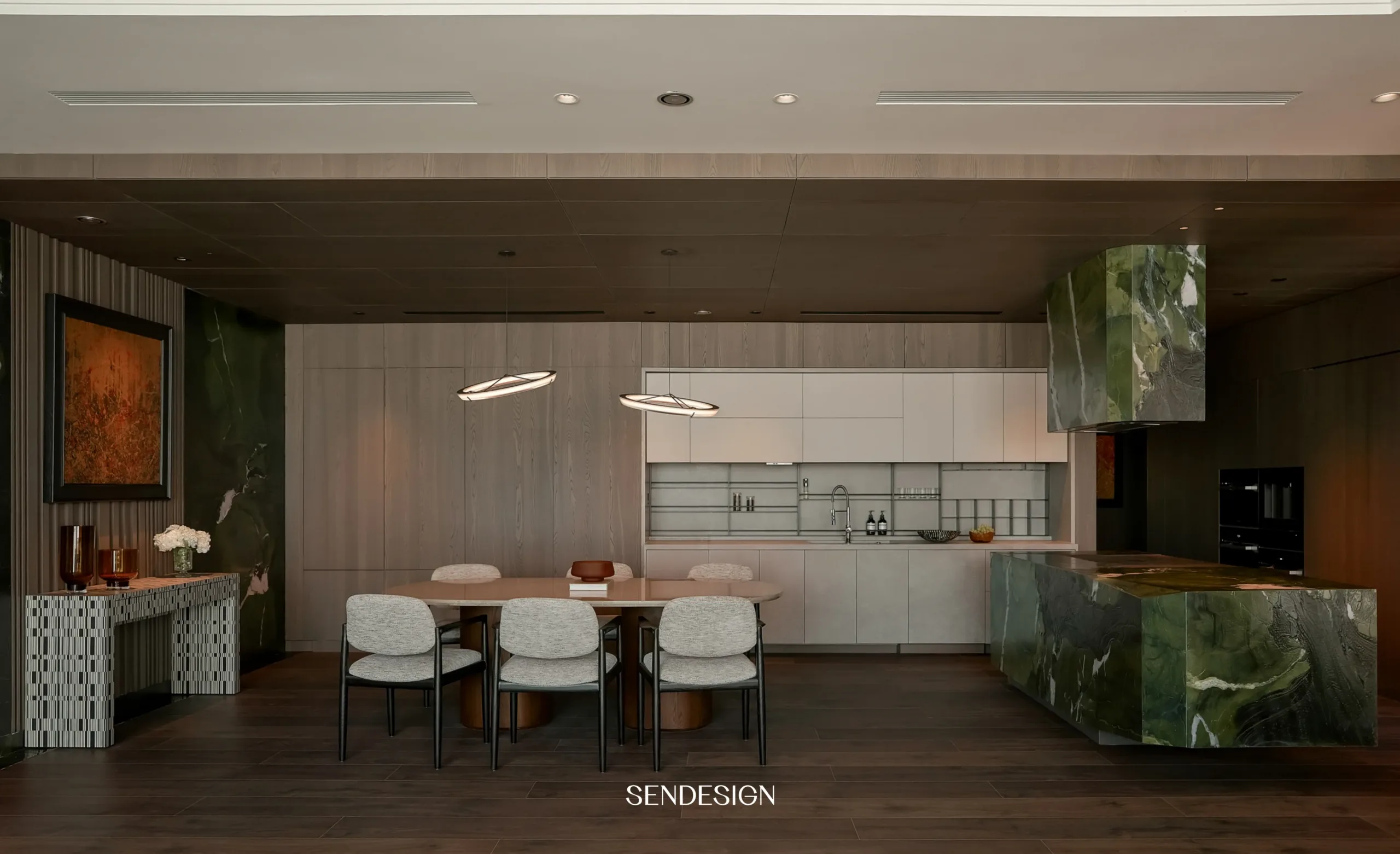
A natural stone slab may look stunning under a showroom’s dazzling lights, yet feel out of place in your home. The difference is that a showroom presents the static beauty of a single product, while a home is a living space shaped by daily routines and emotions.
Rather than choosing stone on impulse or based on a quick scroll through social media, SENDESIGN works with homeowners to answer these five essential questions before selecting stone for their project.
1. Does it feel right, or does it just look good?
You don’t experience a home through a phone screen. A stone surface may look perfect in a photo, but touching it is a different experience altogether. You interact with materials in small, everyday ways: resting your hand on the dining table, leaning against the kitchen island while making coffee, brushing past a countertop, or running your fingers over a surface while chatting.
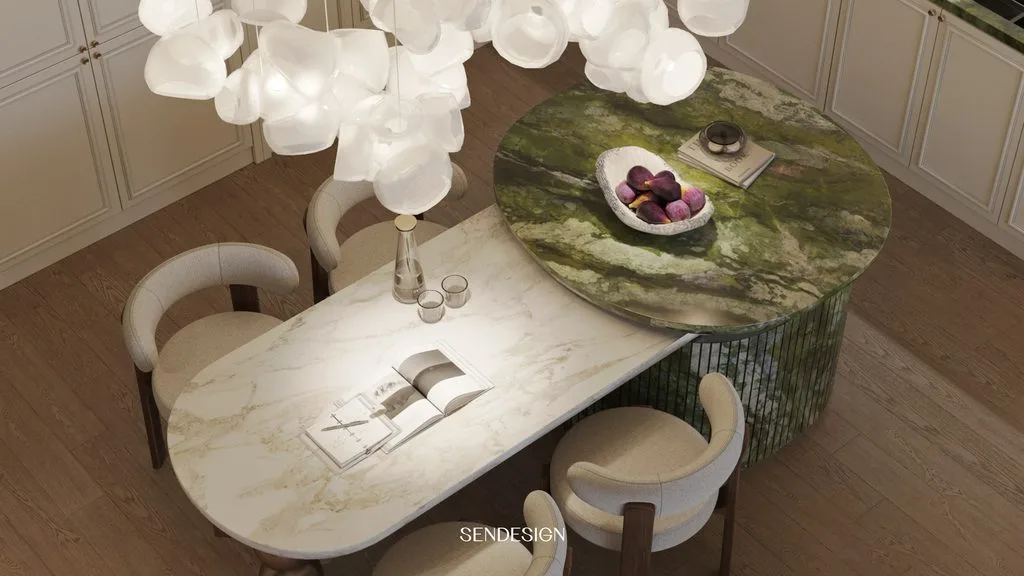
With natural stone, the finish has a big impact on how it feels to the touch. A polished finish is glossy and reflective, bringing out the stone’s color and veining. It makes a strong visual impression, especially under artificial light or in photographs. A honed finish has a soft, matte look that preserves the stone’s natural character and feels smooth and velvety to the touch. A leathered finish has a lightly textured surface that adds tactile depth and makes the stone’s natural character more tangible.
These differences go beyond how a surface feels beneath your fingertips. They also shape how light falls across it, how the stone’s veining appears up close, and how the space feels in everyday use. So when choosing stone for your home, don’t rely on a sample under showroom lights or in a photograph. Run your hand over it. Notice its smoothness, coolness, texture, and the way light shifts across the surface. A finish that looks beautiful in a photo may not be one you’ll want to touch every day.
2. Subtle or bold veining?
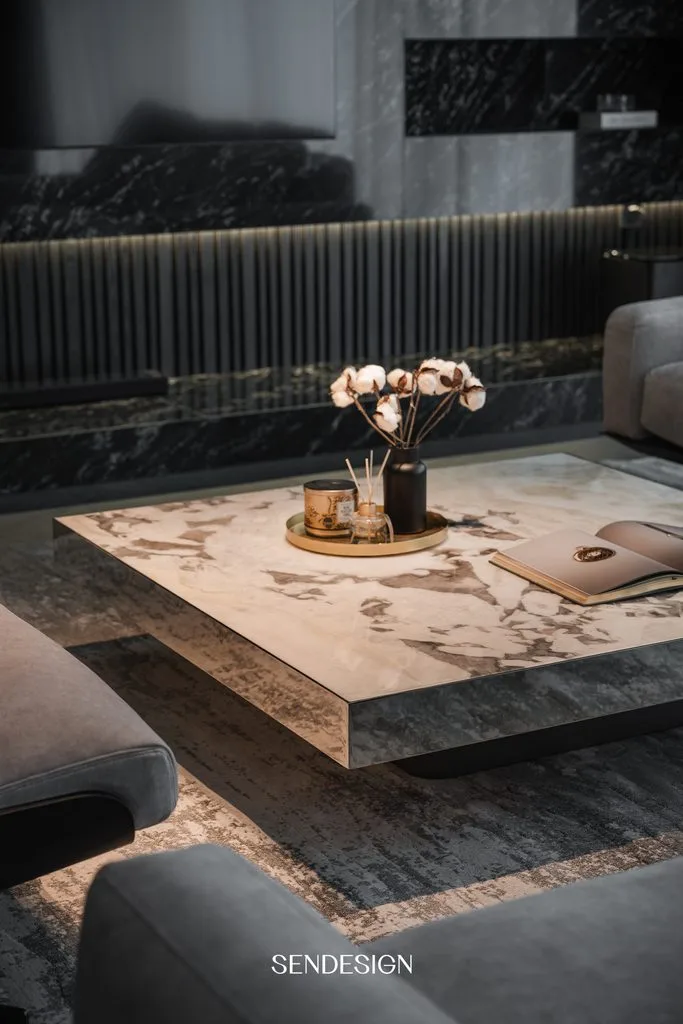
Many people assume that the more dramatic the veining, the more luxurious the stone. But in high-end interiors, true luxury can lie in restraint.
Covering a large area with dense veining can overwhelm the eye and make a room feel crowded. Sometimes, a calm background with subtle veining adds just the right depth, lets surrounding details shine, and gives the space a timeless feel.
3. How does light affect the stone’s appearance?
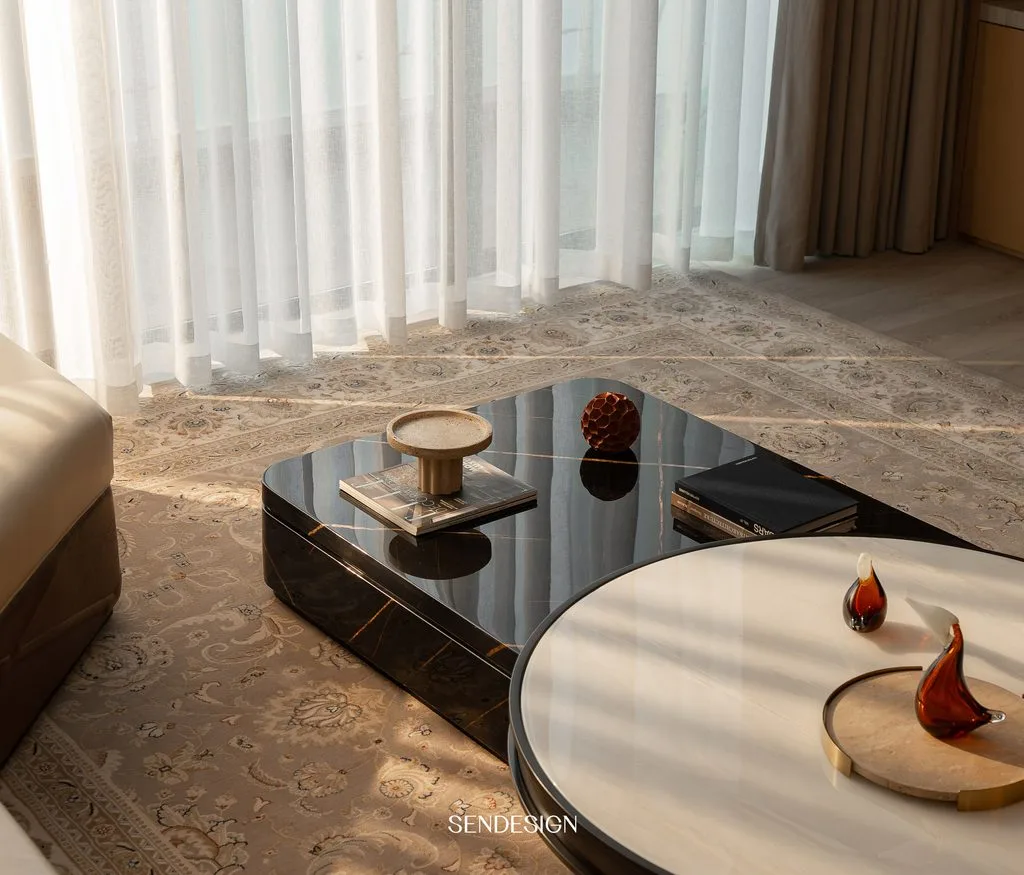
A stone that looks stunning under showroom lighting may look quite different in your home. The light in a living space shifts throughout the day.
Morning sunlight, natural light streaming through large windows, and warm artificial lighting in the evening can all change how the stone’s color and veining appear. A beige slab may look cool and gray in a room with little sunlight, while a glossy surface can create glare when hit by angled light. That’s why choosing stone should always take into account the home’s orientation and its actual lighting conditions.
4. How will your household use the space?
A premium material should make everyday life more comfortable, not turn homeowners into caretakers for the material itself.
Dark-colored or highly reflective stone tends to show fingerprints, grease marks, and fine scratches more easily. For families with young children, a low-reflection, easy-to-clean surface is a more practical and worry-free choice. Rounded edges, rather than sharp corners, also help keep children safe while giving the design a softer, more graceful look.
5. How can you make the most of your budget?
Not every area of the home needs the same level of investment or the rarest stone. Allocate more of your budget to focal points and high-use areas, such as the kitchen island or dining table. For secondary spaces, more affordable, neutral stone can help keep overall costs down while maintaining a cohesive design.
Follow SENDESIGN on social media for more practical insights into materials and the art of creating thoughtful living spaces!