Invisible Housekeeping”: The Hidden Craft Behind Luxury Retreats
SENDESIGN
|
September 14, 2026
In Mansfield Park, Jane Austen captured a timeless hallmark of aristocratic living: everything within a grand estate should appear effortlessly perfect, as though arranged by an invisible hand. In the 21st century, however, that sense of seamless perfection is no longer the work of literary imagination. It is achieved through sophisticated spatial planning and design.
Behind the polished elegance of today’s most exclusive properties, from private mega villas and six star hotels to fine dining destinations, lies a meticulously engineered spatial framework. Every detail is carefully considered to ensure that daily operations remain discreet, efficient, and virtually unseen. This philosophy is known as “Invisible Housekeeping”, the art of designing spaces so that service, maintenance, and logistical flows operate entirely behind the scenes while preserving an uninterrupted sense of comfort, privacy, and refinement for residents and guests alike.
The Foundation of “Invisible Housekeeping”: Separating Experience from Operations
From classical European estates to today’s luxury villas, hotels, and resorts, one intriguing principle remains remarkably consistent: homeowners and service staff rarely share the same circulation routes. Alongside grand hallways, statement staircases, and reception spaces designed for residents and distinguished guests, there is often a parallel network of dedicated pathways connecting kitchens, storage areas, service quarters, and back-of-house facilities. These discreet routes allow operations to run smoothly behind the scenes, ensuring that the guest experience remains uninterrupted and effortlessly refined.
This approach is not driven by aesthetics alone. Rather, it reflects a fundamental design philosophy: living and operating serve different purposes, and therefore should not occupy the same spatial framework. By distinguishing between these two layers from the outset, a home can maintain both operational efficiency and an uncompromised sense of comfort, privacy, and exclusivity.
The True Value of Architecture Lies in How a Space Operates
When dedicated circulation routes are carefully separated, service activities are no longer a series of disconnected movements but part of a coordinated operational system. Deliveries can move efficiently from receiving areas to storage rooms, kitchens, or service spaces through optimized routes, while linens, housekeeping supplies, and technical equipment are transported via pathways reserved exclusively for operational staff.
This structured approach streamlines daily operations, reduces unnecessary interruptions, and allows the property to function with a level of efficiency that remains largely invisible to residents and guests.
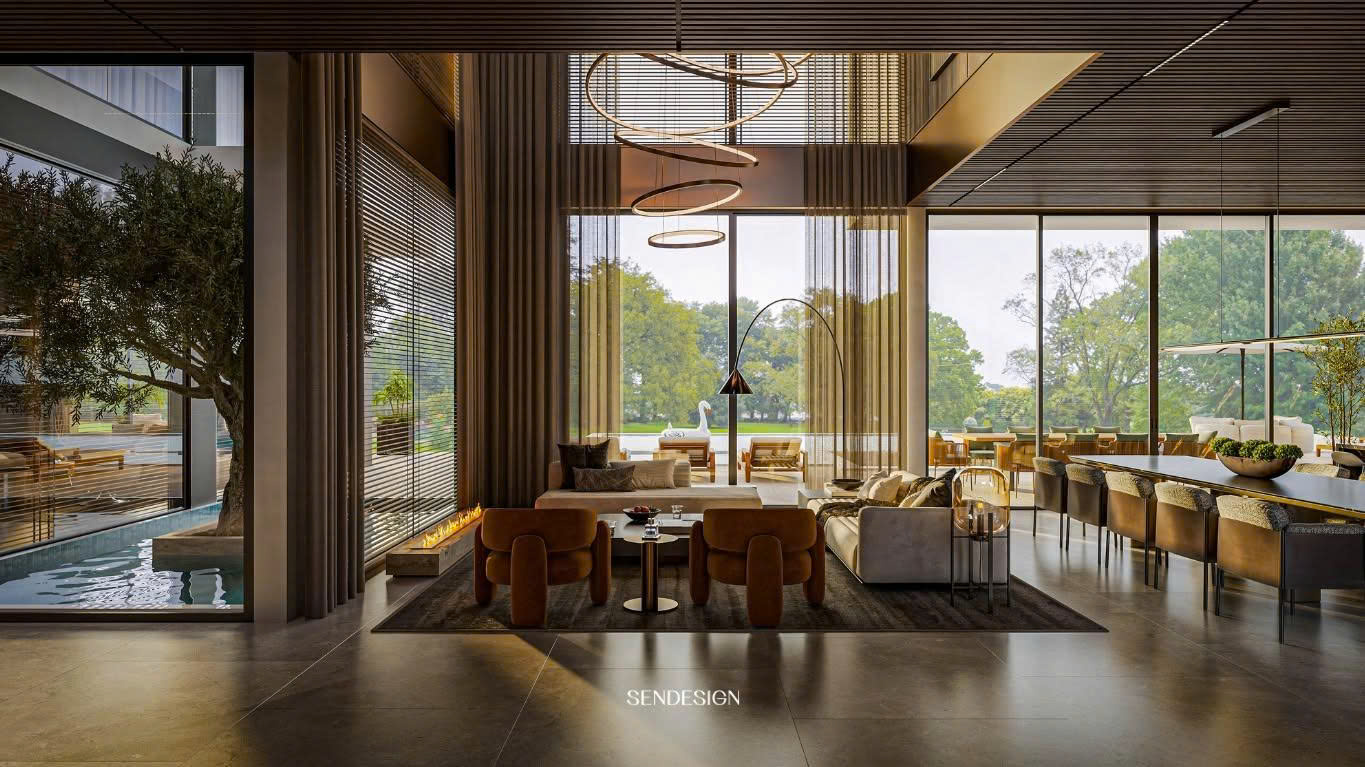
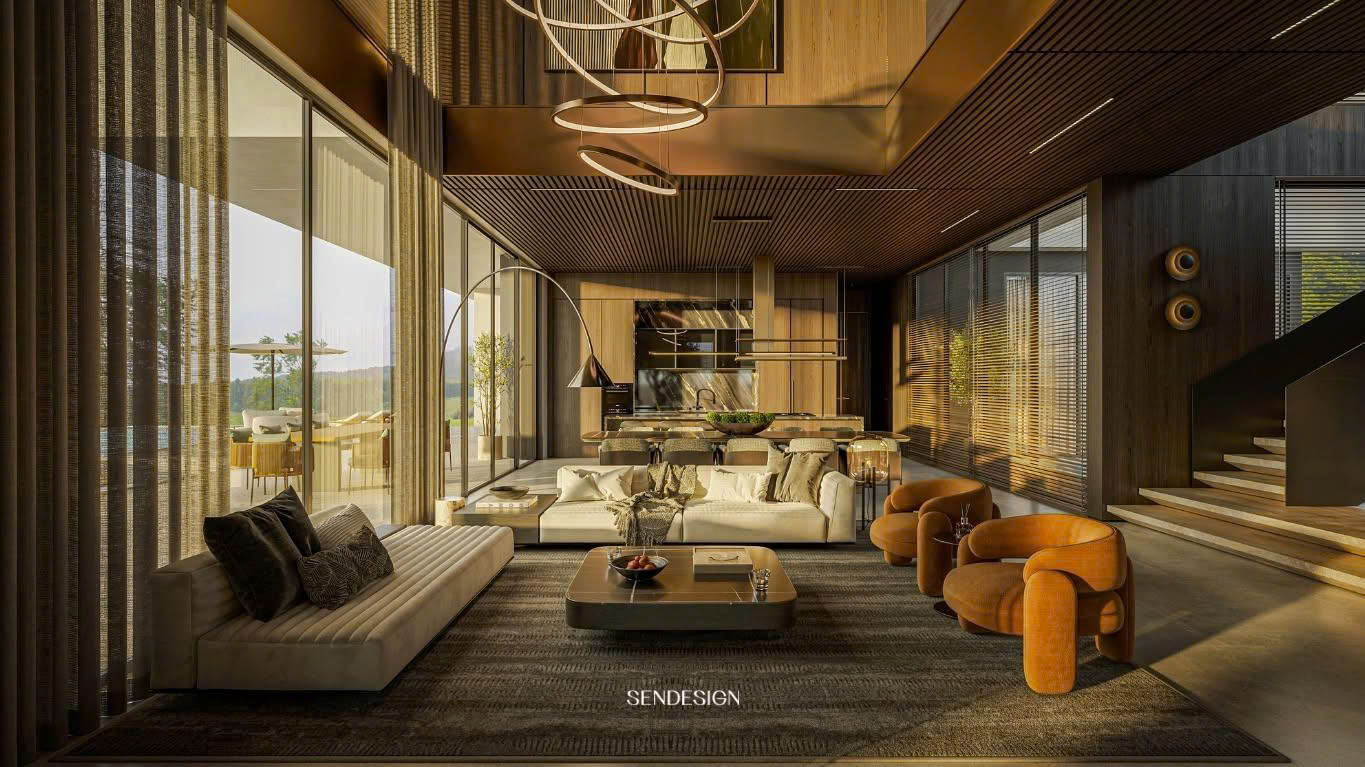
With this approach, service staff can access the areas they need without passing through the home’s primary living spaces. Room preparation, amenity replenishment, housekeeping, and meal service can take place seamlessly alongside daily life. A gathering can be prepared behind the scenes while the living room remains calm and undisturbed. Essential items can be restocked without interrupting spaces that are actively in use.
From this perspective, “Invisible Housekeeping” is not about concealing service activities. Rather, it is about creating the architectural conditions that allow service to occur where it belongs. When operational functions are organized within their own dedicated system, the spaces experienced by residents and guests can retain the sense of calm, order, and ease that defines exceptional living.
A New Standard for Residential Design
A well-designed building is not only evaluated by its form or function, but also by how it is experienced in everyday use. Daily activities, from living and resting to operational tasks, should unfold with ease and continuity, without introducing unnecessary disruption to the spatial environment.
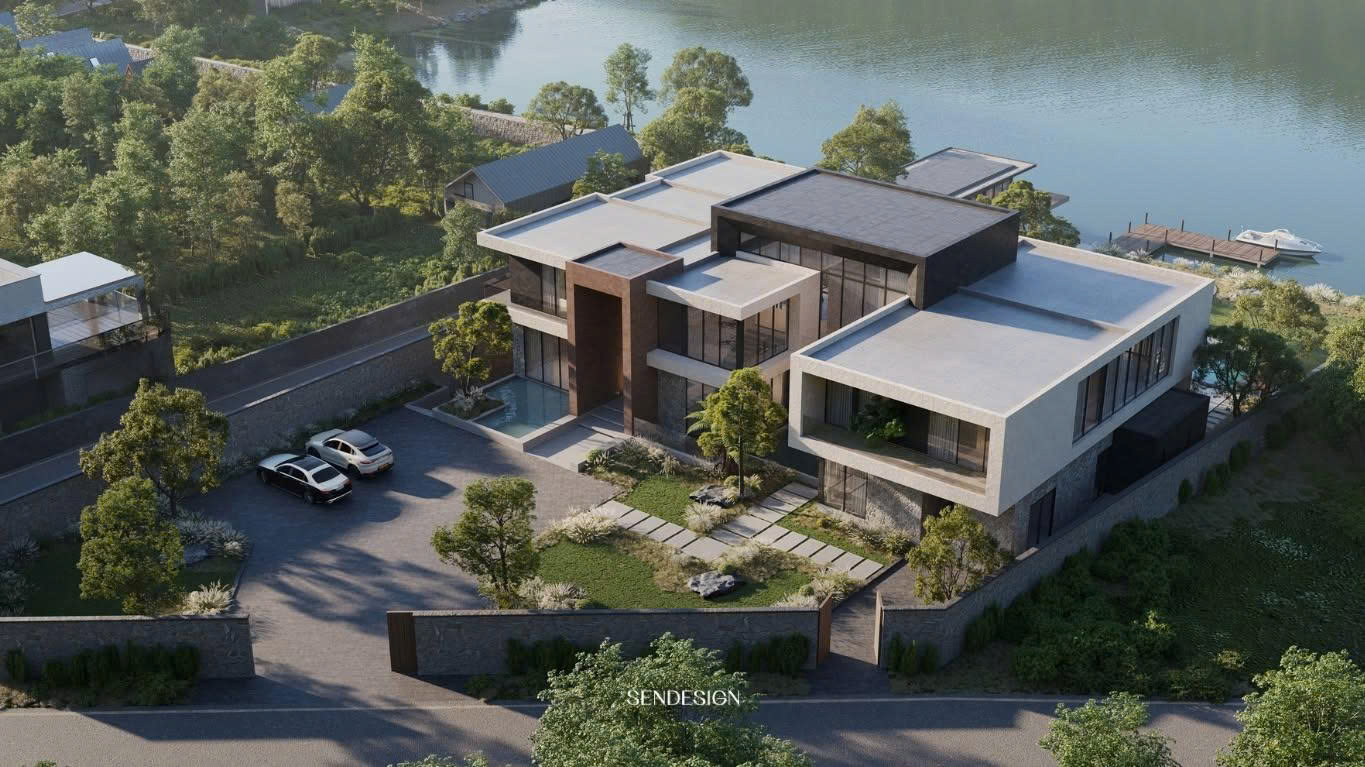
This is precisely what “Invisible Housekeeping” seeks to achieve. Dedicated circulation routes, service zones, and support spaces are arranged so that behind-the-scenes operations can function independently from the primary living areas. As a result, the building maintains a sense of stability and order throughout its everyday use. In this sense, this principle is increasingly becoming an essential standard in carefully considered, high-end residential design.