Exploring standout designs at Dutch Design Week 2026
Duong PT
|
November 4, 2026
At a time when technology allows us to create products with ever greater precision and perfection, Dutch Design Week 2026 turns its attention to the beauty of raw materials, authenticity, and the occasional imperfection.
Under this year’s theme, R.A.W. (Rebel Authentic Worth), Dutch Design Week opens up conversations about the role of design in addressing contemporary challenges, from nature and the built environment to health and technological development. The works presented at the event suggest a broader understanding of design value, one that extends beyond aesthetics and commercial appeal.
In the world of interiors, this perspective comes to life through compelling experiments with materials, forms, and craftsmanship. An object may capture our attention through its tactile qualities, the way light moves across its surface, or the cultural stories embedded in its construction.
Join SENDESIGN as we explore five standout designs from Dutch Design Week 2026 and the fresh perspectives they offer on choosing furniture and objects for our living spaces.
1. GROUND: When appearances deceive the senses
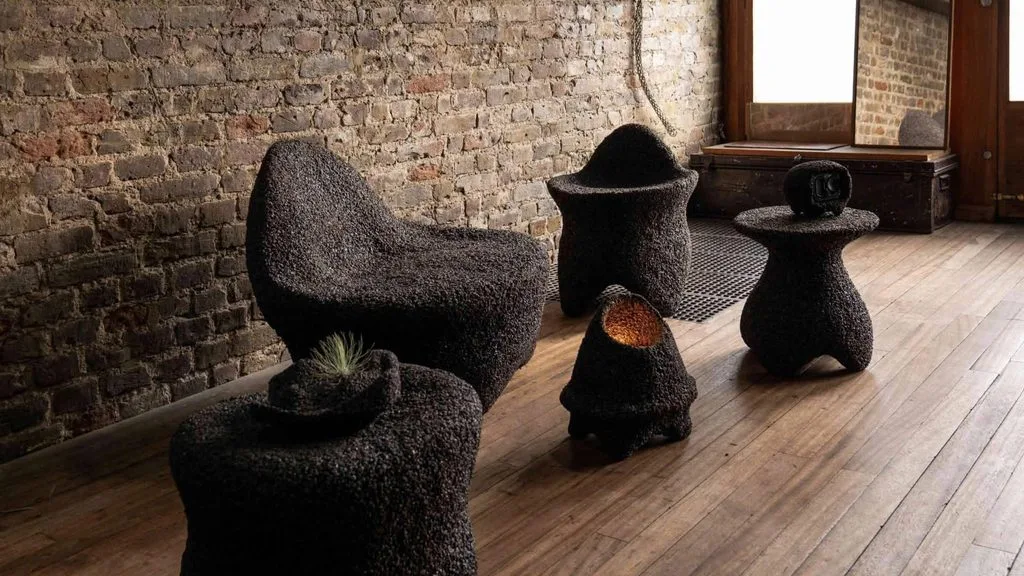
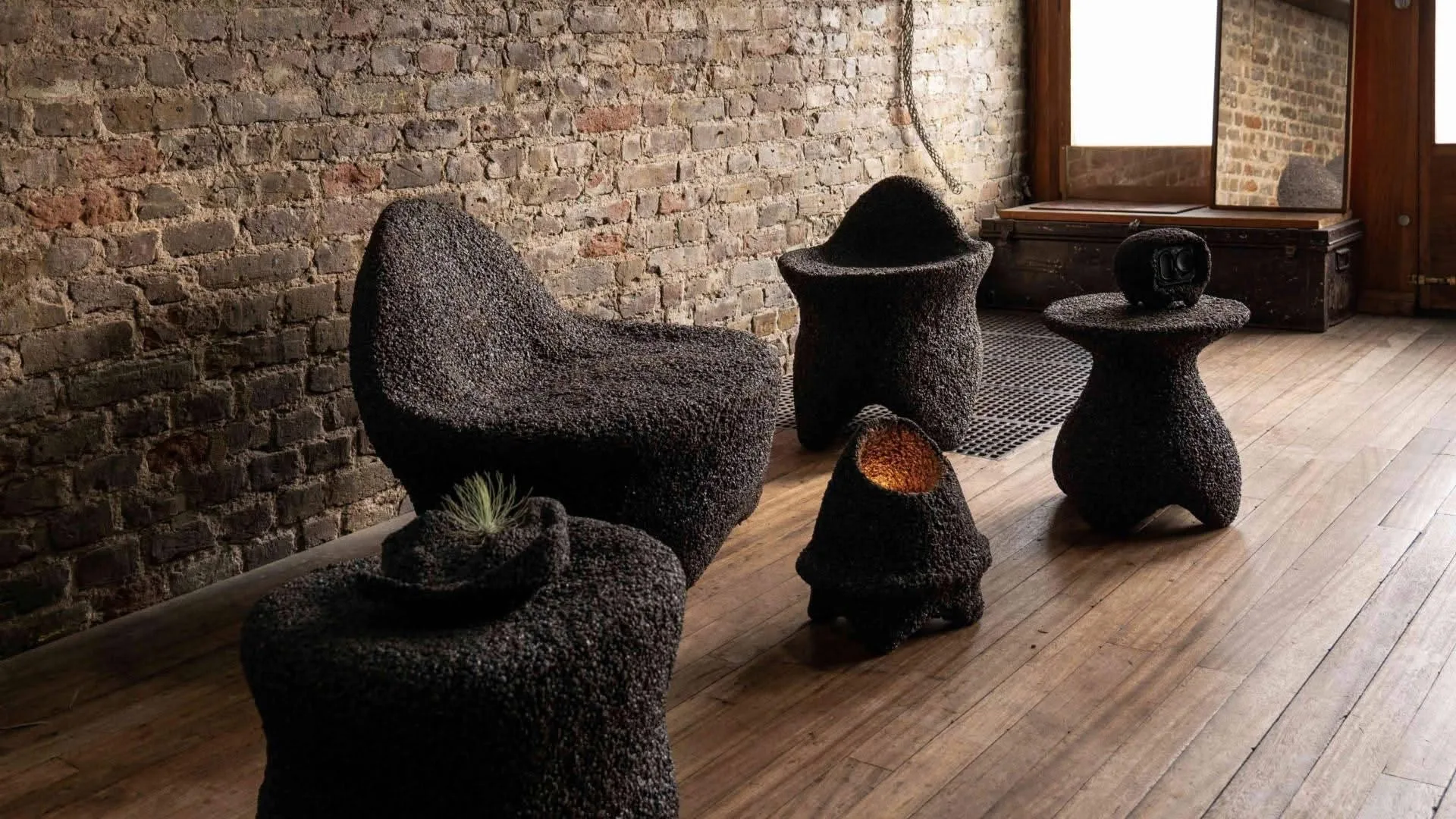
At first glance, GROUND, a collection by London-based designer Luis Ho, resembles a series of volcanic rock formations, with dark tones and rugged, uneven surfaces. Yet touching these pieces reveals an entirely different experience.
Made from a blend of cork, latex, natural cork granules, and charcoal, the objects feel surprisingly warm, with a subtle softness when pressed. The contrast between their seemingly solid appearance and unexpected tactile qualities creates an intriguing sensory experience, encouraging people to explore each piece beyond what meets the eye.
GROUND offers a different perspective on how we select furniture for our homes. Beyond shape and colour, the way a material feels to the touch plays an important role in shaping our everyday experience. A seemingly familiar surface can reveal something unexpected through physical interaction, making even the simplest encounters with everyday objects more memorable.
2. Morgun Oh: Traditional craftsmanship in contemporary design
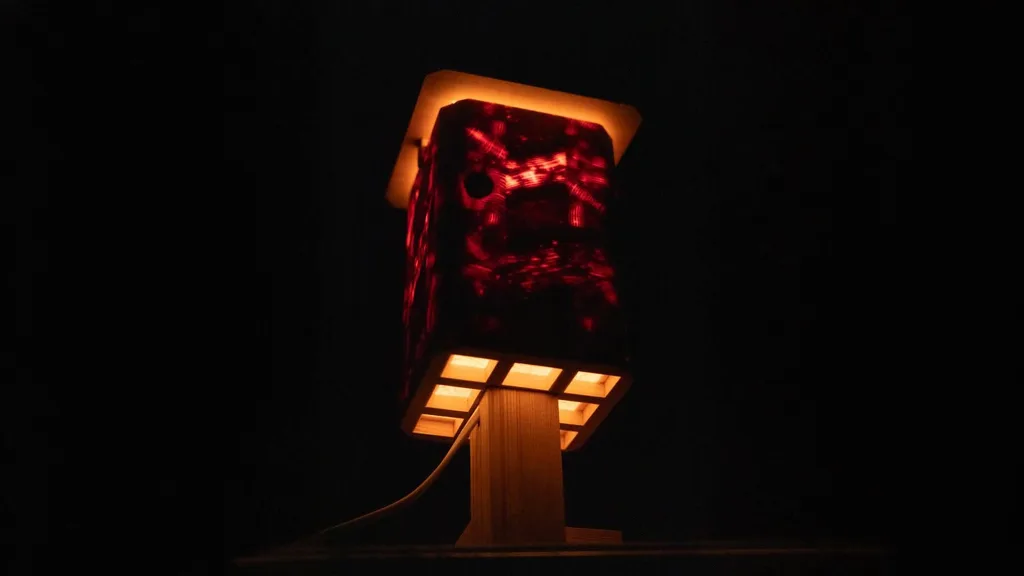
Drawing inspiration from traditional Korean and Japanese wood joinery techniques, designer Morgun Oh creates lighting pieces assembled entirely through interlocking wooden components, without the need for screws or adhesives.
What makes these designs remarkable is the precision with which each component fits together. The construction technique becomes an essential part of the object’s visual identity, reflecting a dialogue between traditional craftsmanship and contemporary design thinking.
Morgun Oh’s lighting pieces remind us that the true value of an interior object often lies in its least visible details. When selecting pieces for a home, understanding how they are made, where they originate, and the cultural traditions behind them can bring greater depth and individuality to the space.
3. Organic Pressure: Bringing sculptural art into living spaces
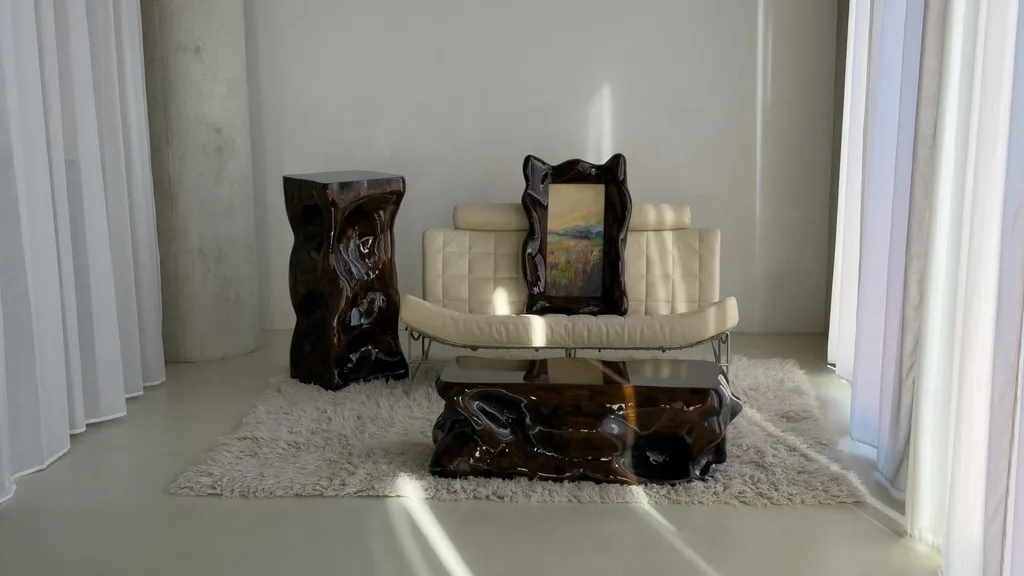
With the Organic Pressure collection, Casper Smits explores the relationship between functional furniture and sculptural art through organic forms, flowing lines, and handcrafted techniques.
The pieces have a distinctly natural character, with curves and proportions that resist rigid conventions. The spontaneity of the creative process gives each object its own identity, inviting us to reconsider the role furniture can play within an interior.
These designs offer an interesting perspective on incorporating sculpture into the home. A carefully selected artistic piece, considered in relation to the proportions and overall design language of a room, can create a compelling focal point without relying on bold colours or excessive decoration.
Handcrafted objects with distinctive forms also carry something particularly valuable: a tangible connection to the maker’s creative process, a quality that is often difficult to find in mass-produced furniture.
4. KOSIMA: Exploring materiality through light
The KOSIMA ceramic lamp by CortoMagDelft presents an intriguing interpretation of ceramics, a material traditionally associated with glazed finishes and relatively consistent colours.
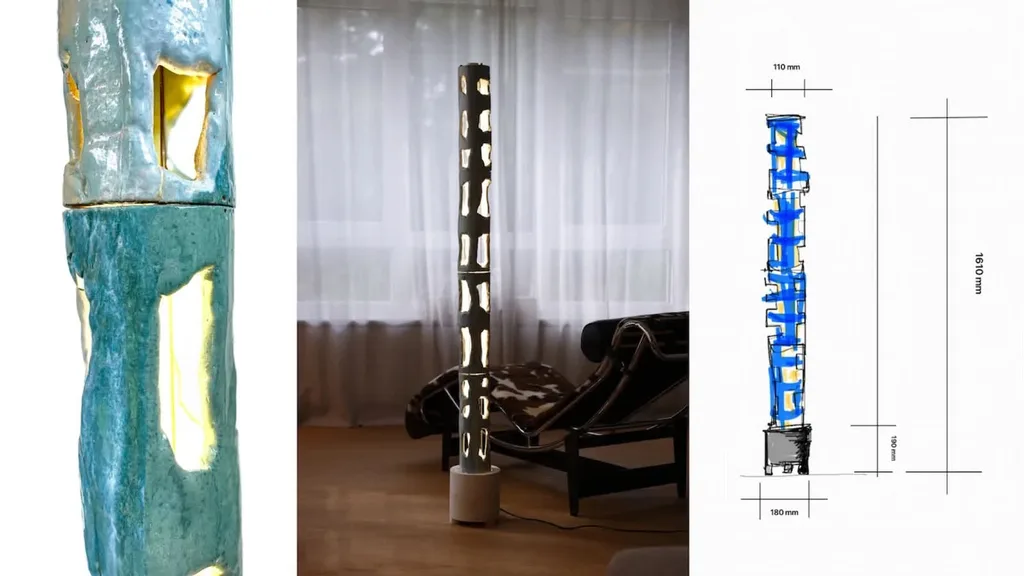
Depending on the viewing angle and lighting conditions, KOSIMA’s ceramic surface reveals shifting tones, ranging from pearlescent hues to delicate shades of blue. This subtle visual transformation allows the lamp to take on different appearances throughout the day, even as its form and structure remain unchanged.
The design highlights an important consideration when selecting interior pieces: the relationship between materials and light. Surfaces that reflect or subtly shift in colour can introduce visual depth, particularly when positioned in areas where natural light changes over the course of the day.
Sometimes, the most compelling feature of a room comes from the way a material responds to its surroundings, rather than from an intentionally striking colour palette.
5. Illuminated Overgrowth: Turning environmental challenges into design opportunities
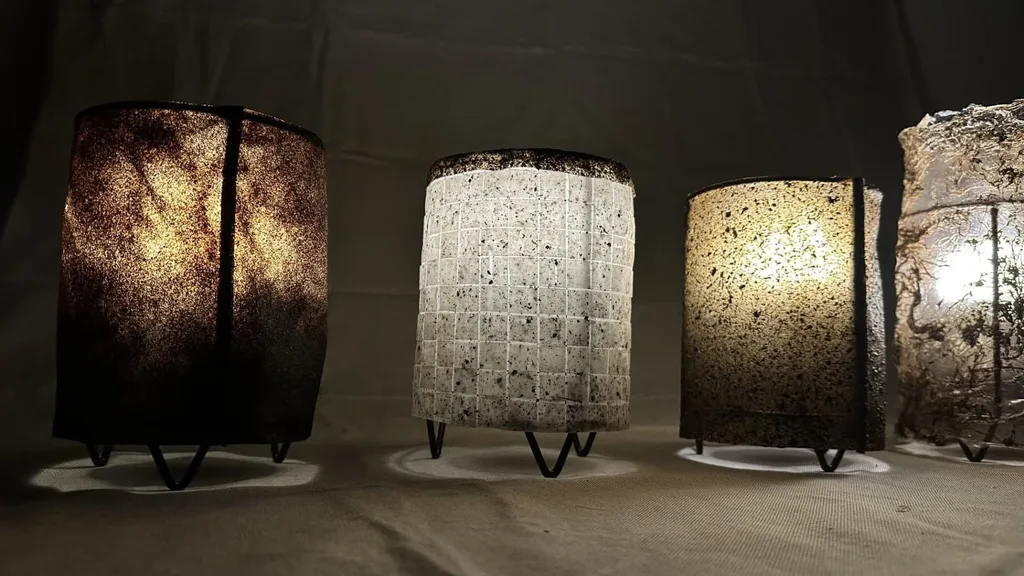
Nitzan Toren’s Illuminated Overgrowth began with an environmental challenge in Nuenen, the Netherlands, where excessive duckweed growth had become an issue in local waterways.
Rather than treating the plant solely as unwanted vegetation, the designer explored its potential as a raw material, transforming it into lighting objects made from bio-based composites. In doing so, a local ecological challenge became the starting point for a functional design solution.
Illuminated Overgrowth demonstrates that valuable design materials do not necessarily have to be rare or expensive. Familiar resources found in our immediate surroundings can sometimes offer unexpected possibilities for creative exploration.
For residential interiors, the project encourages greater consideration of material origins and lifecycles. Environmentally responsible choices, particularly those with a meaningful connection to the places where they are produced, can help foster a closer relationship between our living spaces and the natural world.
Rethinking the value of interior design
The experiments presented at Dutch Design Week 2026 reveal an interesting shift in how designers approach the value of interior objects. Irregular surfaces, spontaneous forms, and materials once regarded as waste are increasingly being explored for their distinctive qualities, rather than treated as imperfections to be eliminated.
This perspective also encourages a more considered approach to selecting furniture and decorative pieces for the home. Beyond form, colour, and visual harmony, tactile experience, craftsmanship, and material origins deserve equal attention. An object may appear simple at first glance yet hold exceptional value through the way it is made and the experience it offers in everyday use.
Ultimately, visual perfection still has its place, but it need not be the only measure of good design. A home with genuine character also leaves room for unconventional materials, the marks of craftsmanship, and forms of beauty that do not always conform to established ideals.
References: Dutch Design Week, Vogue Adria