Amanoi Vinh Hy: An Architectural Masterpiece in Nui Chua Biosphere Reserve
SENDESIGN
|
September 14, 2026
Nestled along the picturesque Vinh Hy Bay in the sun-drenched province of Ninh Thuan, Amanoi has long transcended the boundaries of a conventional resort to become an enduring icon of Asian hospitality and resort architecture. Its name thoughtfully combines “Aman,” the Sanskrit word for peace, with “Noi,” the Vietnamese word for place, forming a fitting expression of a sanctuary defined by serenity.
Designed by renowned architect Jean-Michel Gathy, founder of Denniston, the resort has been celebrated by publications including Architectural Digest, Condé Nast Traveler, and Travel + Leisure for its remarkable response to the challenge of creating a luxurious retreat while remaining deeply respectful of its untouched surroundings and local cultural heritage.
“Tựa sơn hướng thủy”: A Sanctuary Shaped by Mountain and Sea
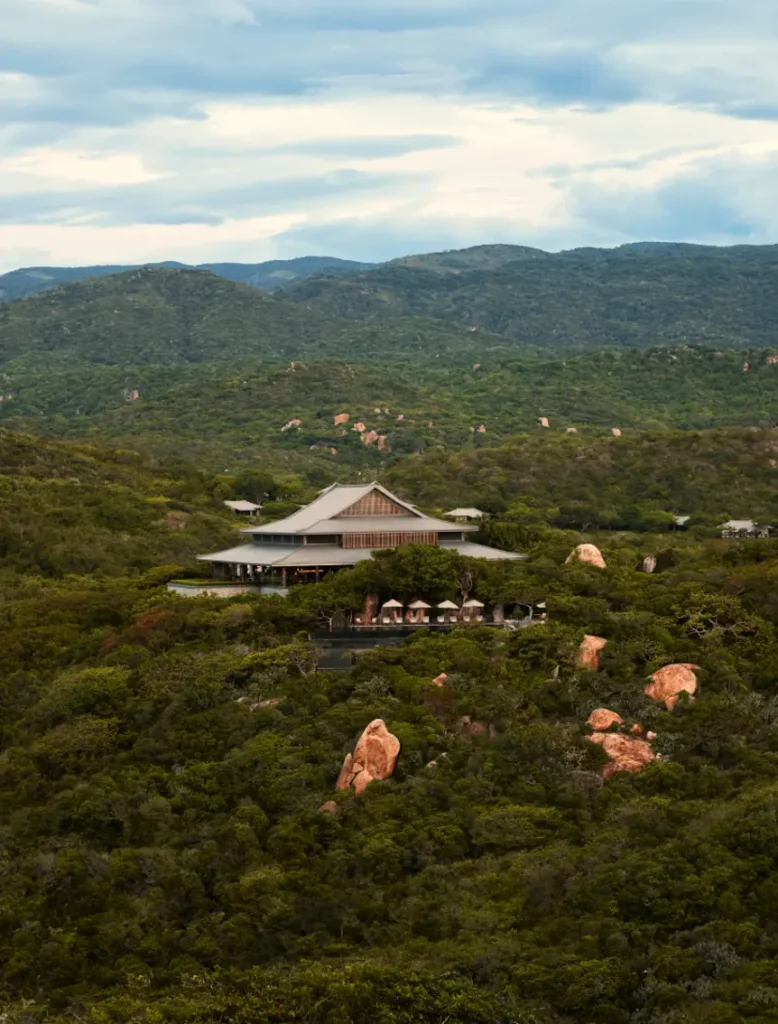
Amanoi’s enduring appeal begins with a deep understanding of the landscape and the principles of Eastern geomancy. Spanning more than 50 hectares within the core zone of Nui Chua National Park, the resort makes full use of the classic “tựa sơn hướng thủy” setting, with its buildings nestled into the gentle hillside and oriented toward sweeping views across the clear waters of Vinh Hy Bay.
This arrangement does more than create a harmonious relationship between the mountain and the sea. It allows each accommodation to function as a private vantage point, offering uninterrupted views of the vast ocean and the surrounding ancient forest. From every corner, guests are given a sense of being immersed in the landscape, with nature becoming an integral part of the experience rather than simply a backdrop.
The Essence of Vietnamese Culture in a Contemporary Minimalist Language
The Vietnamese identity of Amanoi goes beyond surface-level imitation or forced references to traditional symbols. Instead, it is distilled into a clear and contemporary architectural language.
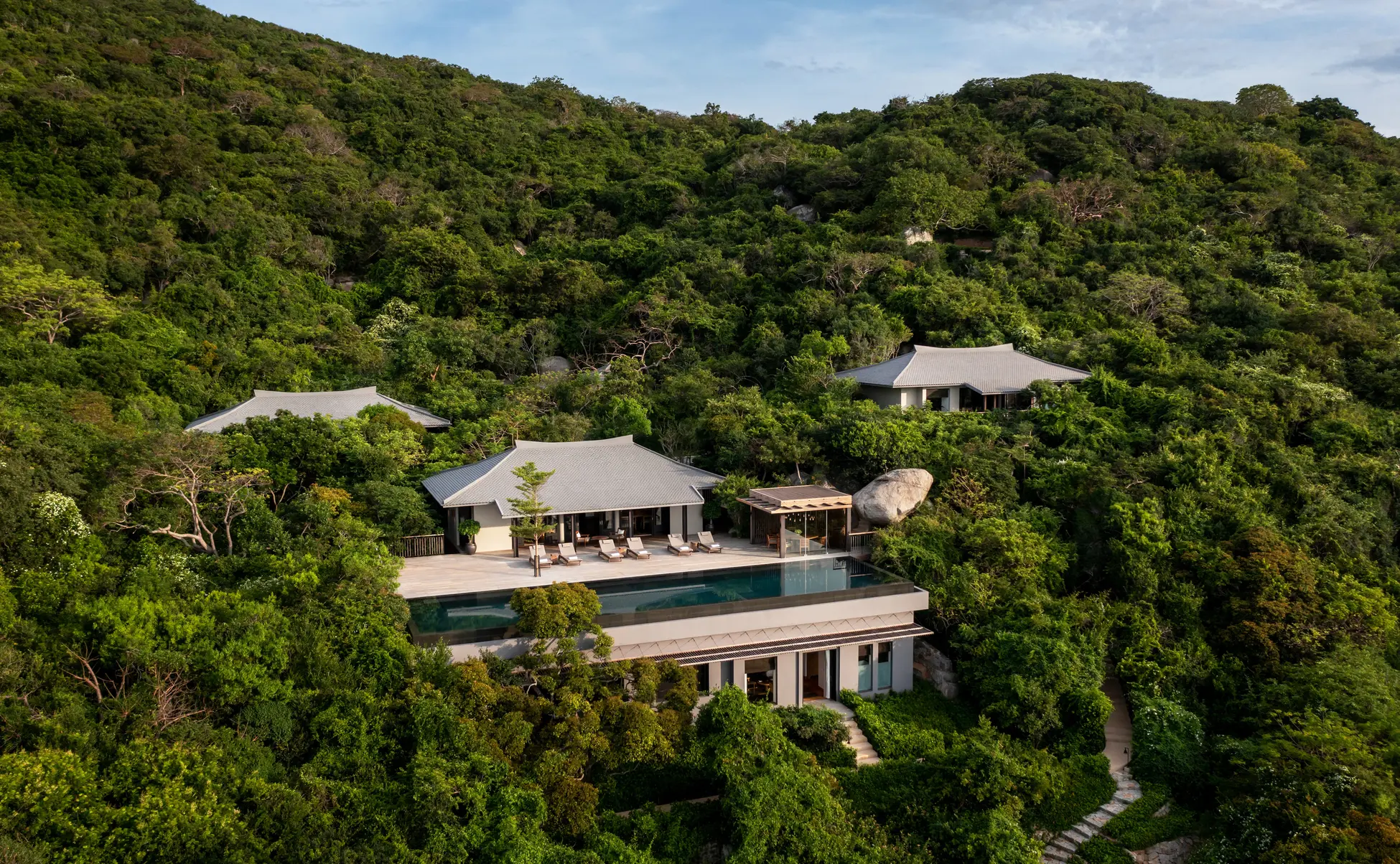
At the heart of the resort is the Central Pavilion, prominently positioned on the hilltop and drawing direct inspiration from the traditional Vietnamese nhà rường and the layered roof structures of northern village communal houses. Its gently pitched, multi-tiered tiled roofs extend outward to create an elegant rhythm against the sky, while also capturing the cool sea breezes from the East Sea. This natural airflow helps cool the expansive space below, allowing traditional architectural principles to work seamlessly within a contemporary resort setting.
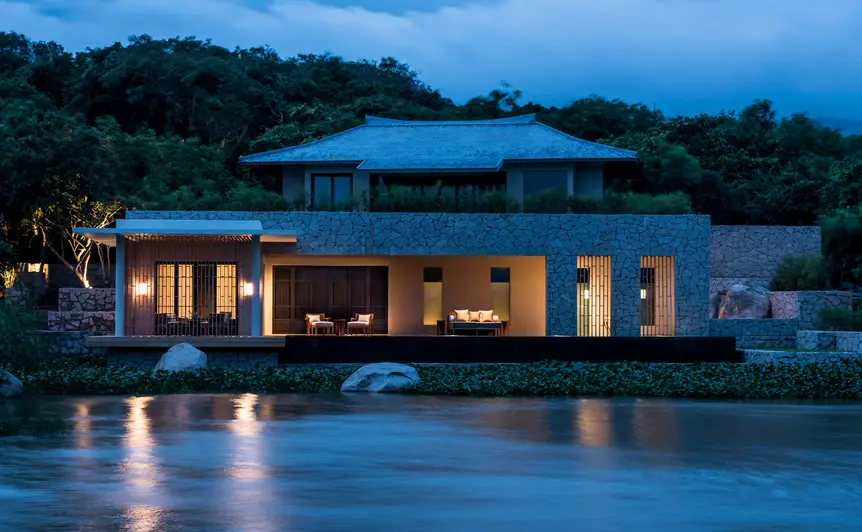
Alongside the Central Pavilion, the individual pavilions and villas subtly reinterpret the form of traditional Vietnamese rural houses, retaining their familiar tiled roofs while carefully refining the proportions and volumes to meet a more sophisticated contemporary standard.
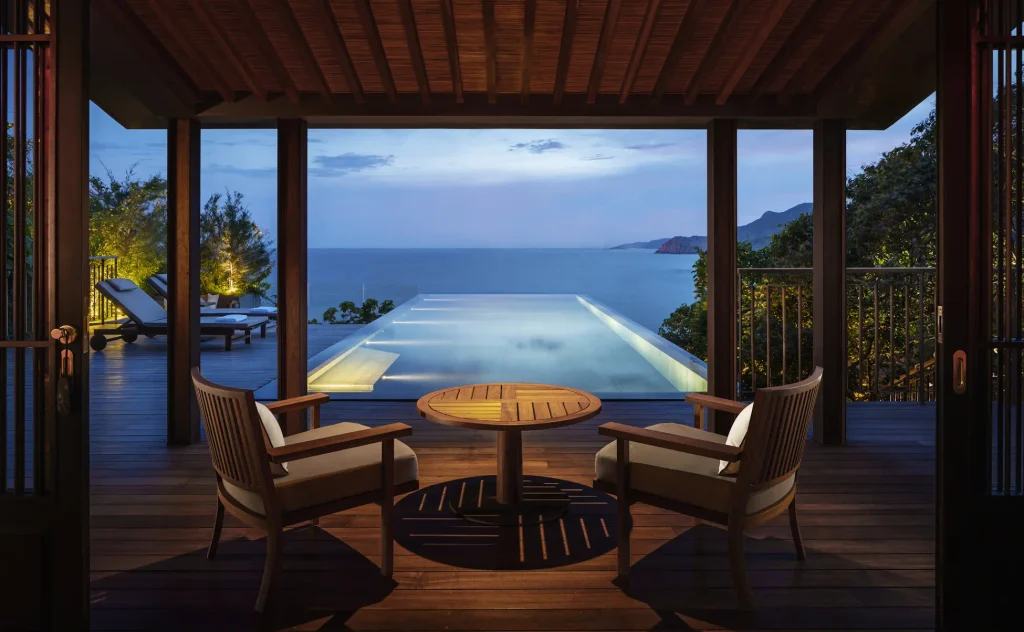
The celebration of local culture continues in the planning of the resort, which draws from the spatial organization of traditional Vietnamese homes. A sequence of spaces, from the entrance and covered verandas to courtyards and the main living areas, creates a gradual transition while allowing natural air to circulate freely throughout.
Inside, Jean-Michel Gathy brings local craftsmanship into the interiors through carved timber details, rough granite, finely woven bamboo and rattan, silk, and the distinctive Bàu Trúc pottery of the Cham people of Ninh Thuan. Cham heritage and the spiritual traditions of the indigenous Raglai community are also subtly reflected in restrained geometric sculptural forms and the warm glow of lanterns, evoking the mysterious sacred flames once seen within the niches of ancient Cham towers.
“Building Without Building”: An Architecture Rooted in the Ancient Forest
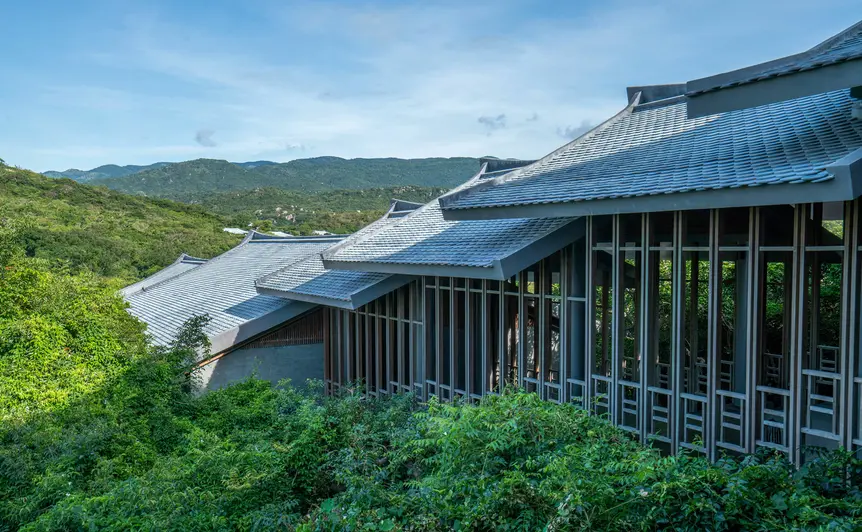
Set within Nui Chua’s distinctive coastal dry forest ecosystem, Amanoi embraces a sustainable approach rooted in working with nature rather than imposing upon it. The architects deliberately avoided leveling the site or cutting into the mountains and hills. Instead, the construction team carefully mapped the location of every mature tree and weathered granite boulder, allowing the foundation system to weave around them rather than disturbing the landscape.
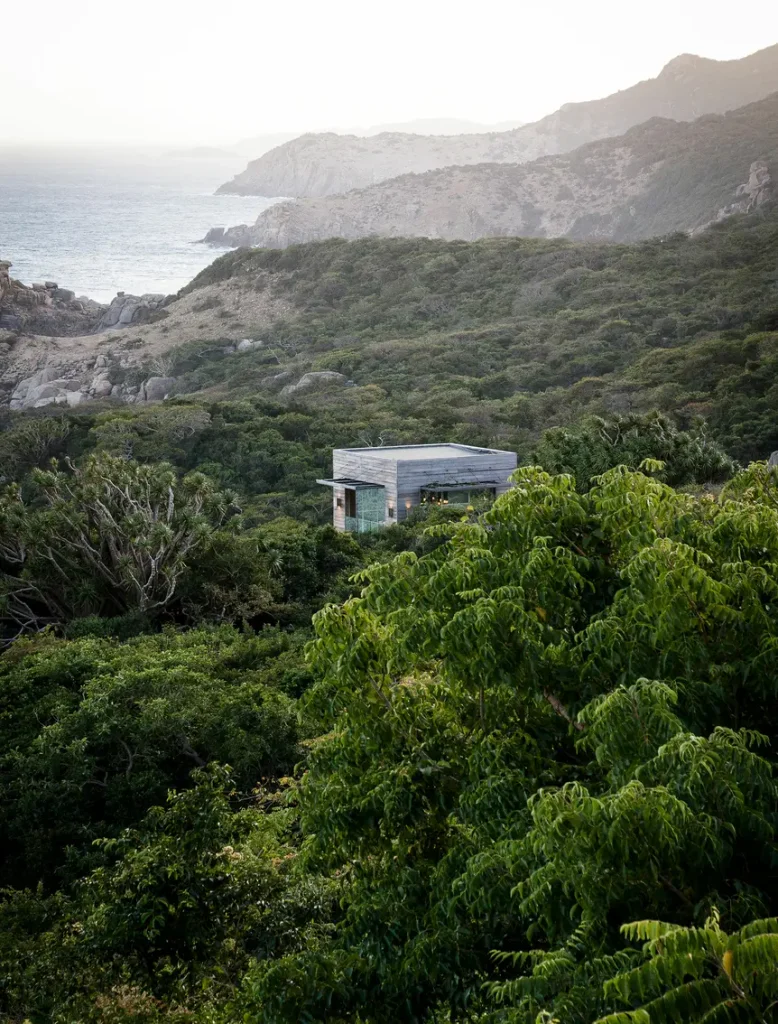
More than 30 villas are carefully positioned to follow the contours of the natural rock formations, tucked discreetly beneath the forest canopy. Seen from the sea, the boundary between architecture and landscape almost disappears, leaving only an expanse of green punctuated by muted grey roofs that blend seamlessly into the rocky terrain.
Open-Plan Design, Sea Breezes, and the Infinity Pool

The connection between people and nature reaches its most tranquil expression at Amanoi Spa House, where open timber platforms extend gently over the still surface of a natural lotus pond. Beyond softening the dry coastal climate, the pond also acts as a natural acoustic buffer, filtering out surrounding noise and leaving only the sound of wind moving through the trees.
The open-plan design further strengthens this sense of immersion. Floor-to-ceiling glass panels and a deliberate reduction of rigid partitions allow natural light and cool sea breezes to flow freely through the interiors. As the clouds and sky shift throughout the day, the changing landscape becomes a living composition within the space itself.
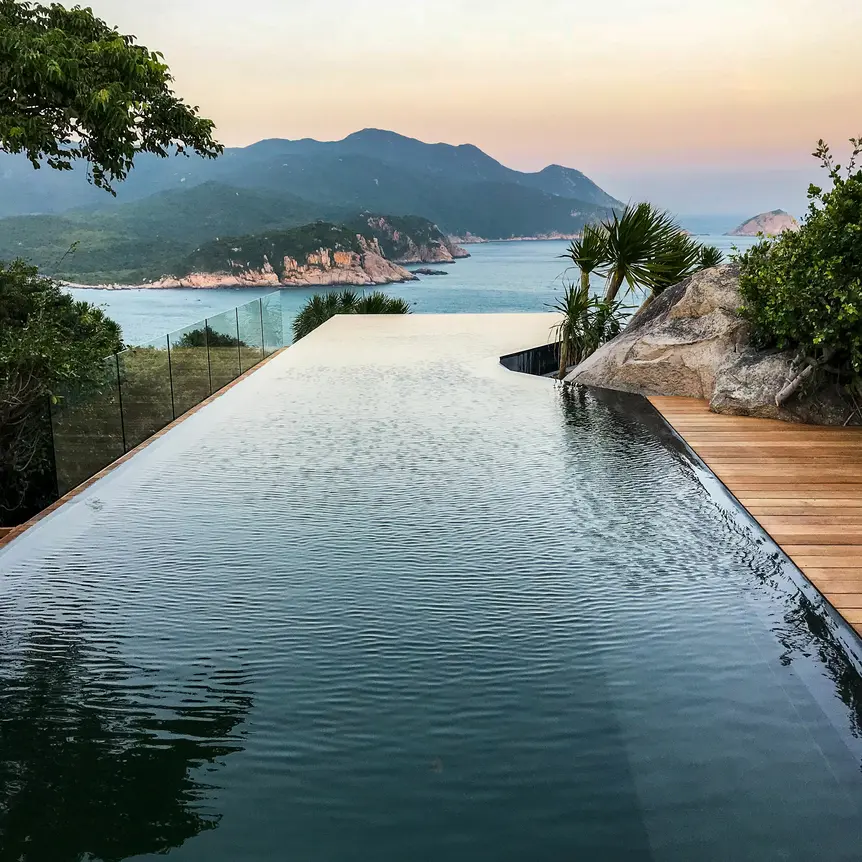
The visual experience reaches its most striking expression at the Cliff Pool, perched dramatically above the rocky cliffside. Like a vast mirror suspended between sky and sea, its still surface appears to extend seamlessly toward the horizon, bringing the entire sweep of Vinh Hy Bay into view.
At this meeting point between water, sky, and landscape, the boundaries of the view seem to dissolve. What remains is an expansive sense of openness, where the architecture recedes and the vastness of nature takes centre stage.
Amanoi and the Art of Quiet Luxury
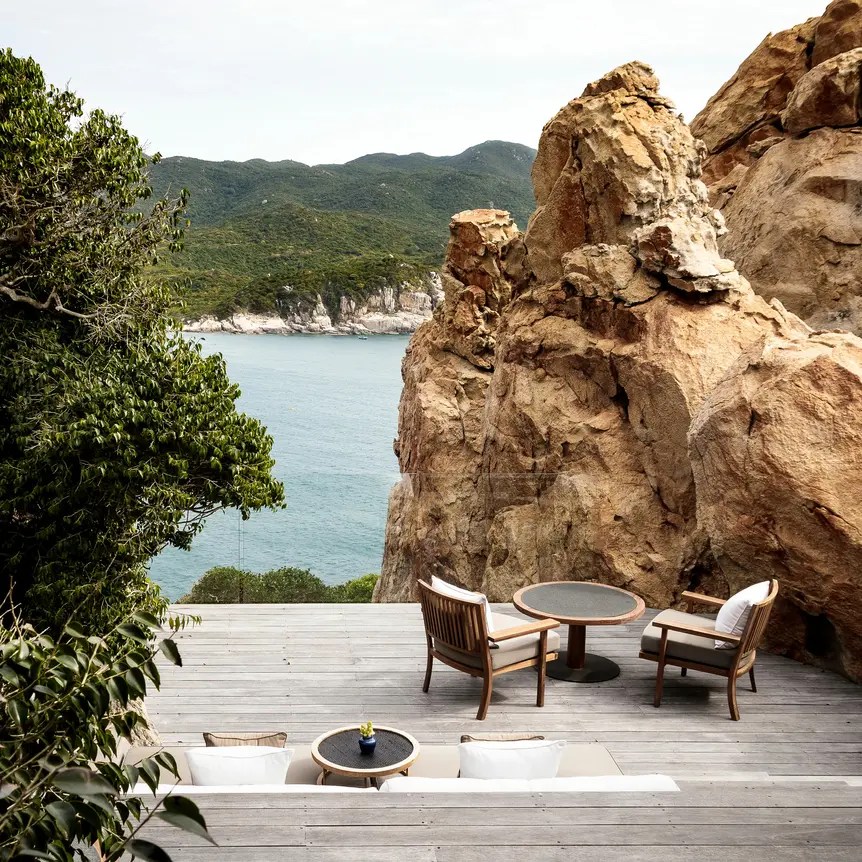
For the creative team at SENDESIGN, what makes Amanoi truly luxurious is its embrace of Quiet Luxury, a form of luxury expressed through restraint rather than display. Here, luxury is not defined by polished gold details or gleaming marble surfaces, but by an exceptionally low building density, generous distances between spaces, and a rare degree of privacy.
Architecture takes a deliberately understated role, retreating into the landscape to become an elegant frame for the enduring beauty of the sea, sky, and surrounding cliffs. Amanoi demonstrates that the essence of exceptional resort architecture lies not in how much it builds, but in how deeply it belongs to its setting, preserving and elevating the cultural identity of the place alongside the untouched character of its natural surroundings.