Inside the Home of Koos de Keijer, Shaped by Place and Time
SENDESIGN
|
August 8, 2026
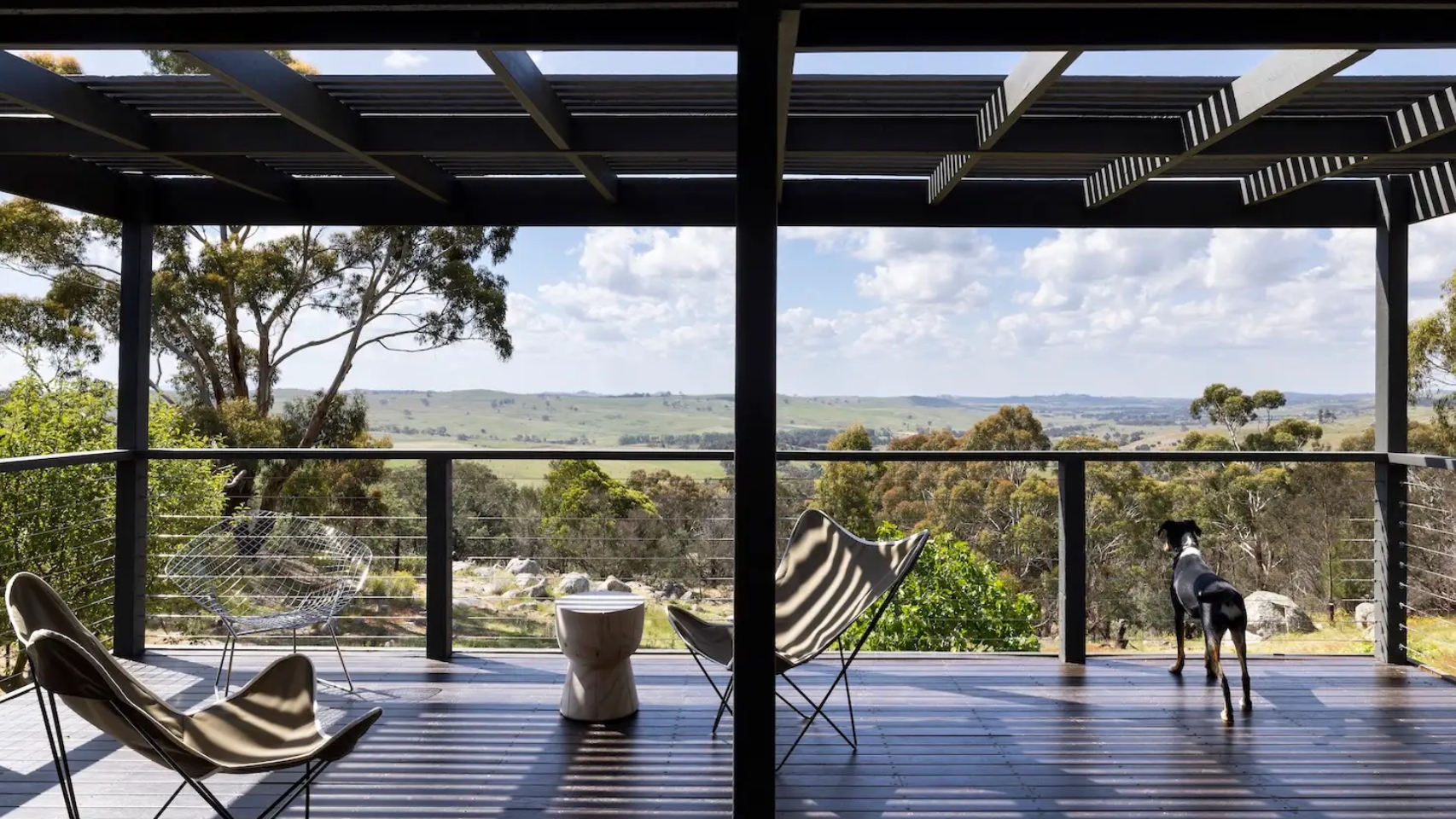
Its appeal lies not in opulent furnishings or visually arresting statements, but in something far more understated.
In an architect’s home, the most compelling reflections often emerge from quieter decisions: the way the building responds to its landscape, the way light filters through each opening, and above all, the thoughtful use of materials designed to endure over time.
Koos de Keijer’s retreat in Central Victoria, home to the founder of DKO Architecture, stands as a pure expression of that philosophy.
As one of Australia’s leading architecture studios, DKO Architecture is renowned for its residential, hospitality, and luxury resort projects, earning recognition across numerous international architecture and design publications.
Set on a quiet hillside, the house does not attempt to stand apart from its surroundings. Instead, it settles gently into the landscape, shaped by the contours of the land and the changing qualities of light and weather. Yet the true depth of the project lies not only in its setting or expansive views, but in the way materials have been thoughtfully selected to support everyday living and endure beautifully over time.
When Materials Transcend Aesthetics
In conventional luxury residential design, materials are often treated as a statement in themselves: rare, expensive, pristine, and meticulously finished.
For Koos de Keijer, however, granite, travertine, and onyx are approached differently. They appear as though they have always belonged to the site, neither excessively polished nor designed to draw attention to themselves. Rather than serving a purely decorative purpose, they become an integral part of the architecture and the experience of inhabiting it.
For an architect, material selection is a decision measured in decades. The question is not simply how a space will look when it is first completed, but how it will age and evolve over time. What will it feel like after ten years, or even fifty?
Natural stone has become an indispensable material in the making of truly unique residences.
Raw materials are chosen not to create an instant impression, but to allow a space to mature gracefully over time. Small scratches, subtle changes in tone, and the marks left by everyday living are not treated as flaws. Rather, they become part of an evolving narrative, revealing the passage of time and the presence of life itself.
Materials as the Essence of Experience
In this home, stone is far more than a surface material. It retains warmth through the winter months, offers a cooling presence in summer, and contributes to a sense of calm and permanence within the space. Its presence is deeply tied to the experience of living: from the morning light gliding across its surface to the quiet comfort of gathering by the fireplace on a windy day.
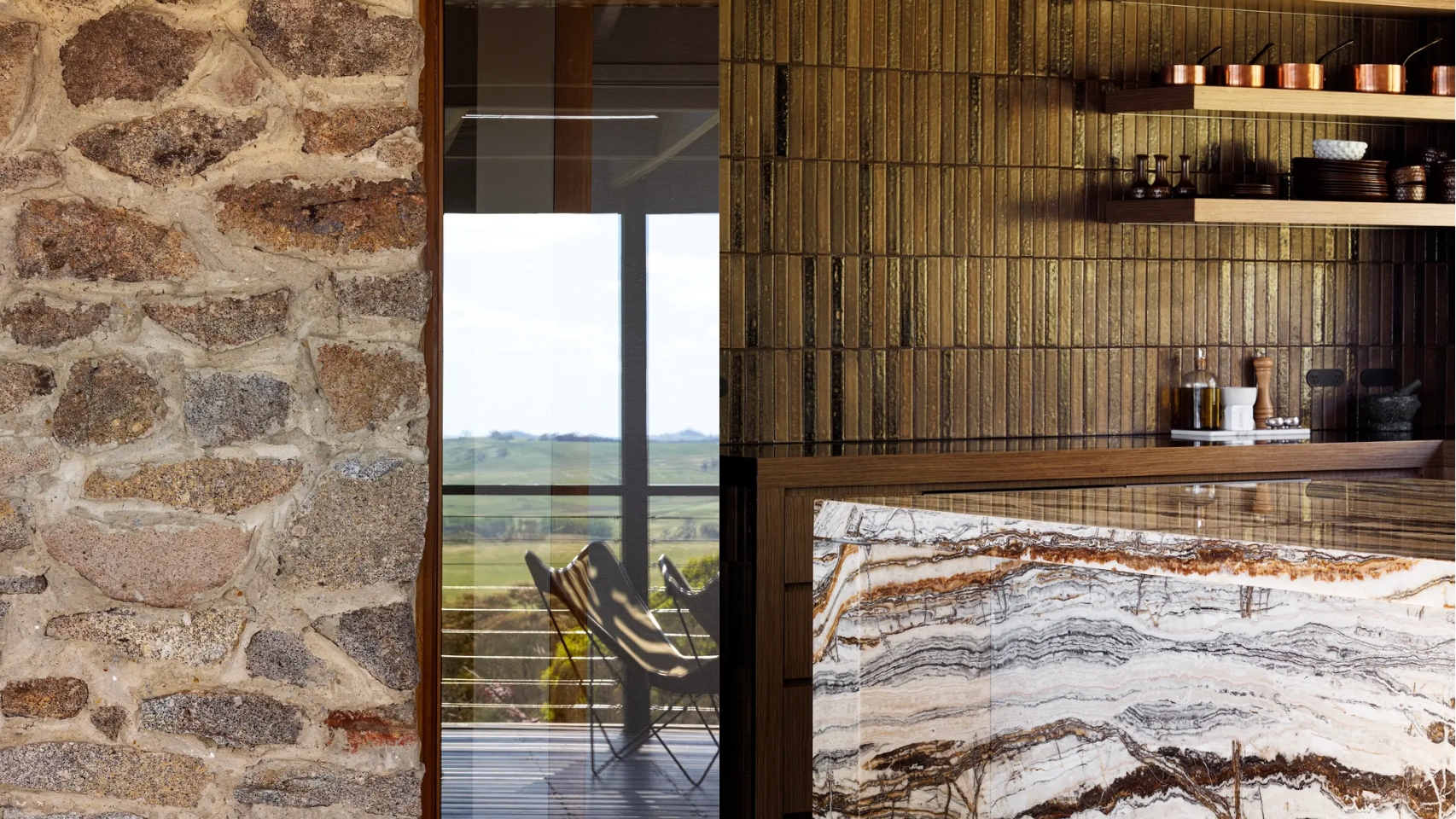
Natural wood and stone are used in careful balance throughout Koos de Keijer’s home, creating an atmosphere that feels both grounded and distinctive.
This stands in stark contrast to a design approach driven by trends. Rather than continually refreshing a space through changing aesthetics, the architect chooses to enrich it through materiality. When materials possess an inherent authenticity, a home does not need to be constantly reinvented. Instead, it gains depth over time, shaped by the people who inhabit it and the rhythms of everyday life.
In the End, What Remains Is a Sense of Belonging
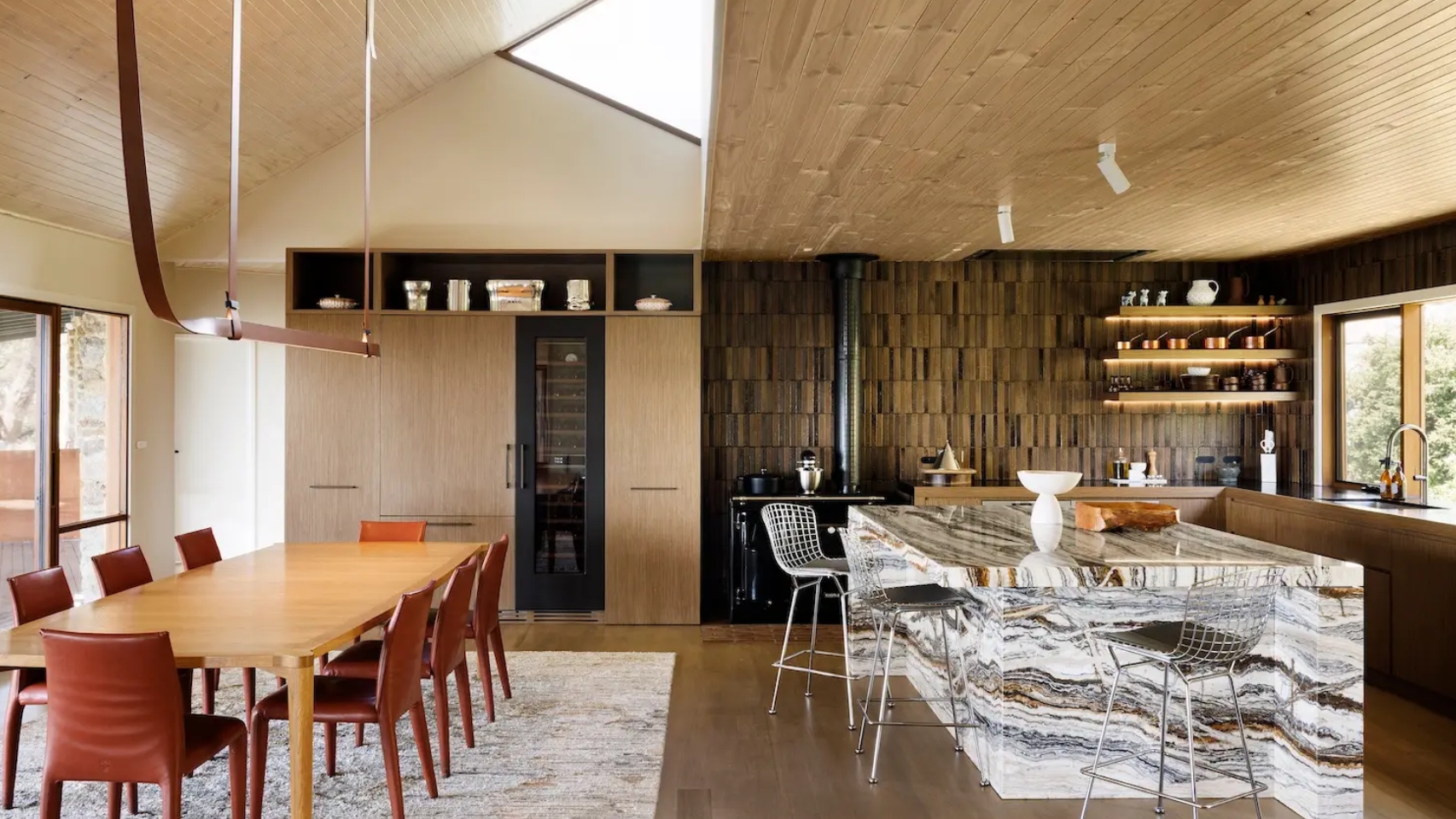
The thoughtful use of colour, combined with sculptural furnishings, brings an added sense of character and intrigue to the home.
Although he has worked across major cities on projects of considerable scale, Koos de Keijer has chosen a slower rhythm of life for himself, one shaped by walks through the forest, evenings by the fire, and the quiet observation of shifting light. In this setting, materials become more than architectural elements; they form a subtle foundation that supports everyday wellbeing and a deeper connection to place.
Perhaps the greatest lesson from an architect’s own home lies not in what is put on display, but in what is intentionally preserved: simplicity, authenticity, and the ability to endure through time. When a space is designed to evolve with the passing years rather than resist them, architecture begins to fulfil its most essential purpose: enriching the experience of living.
Source: Est Living.